

Conclusions of the Workshop on Institutional Reform and Governance Modernization in the Agricultural Sector
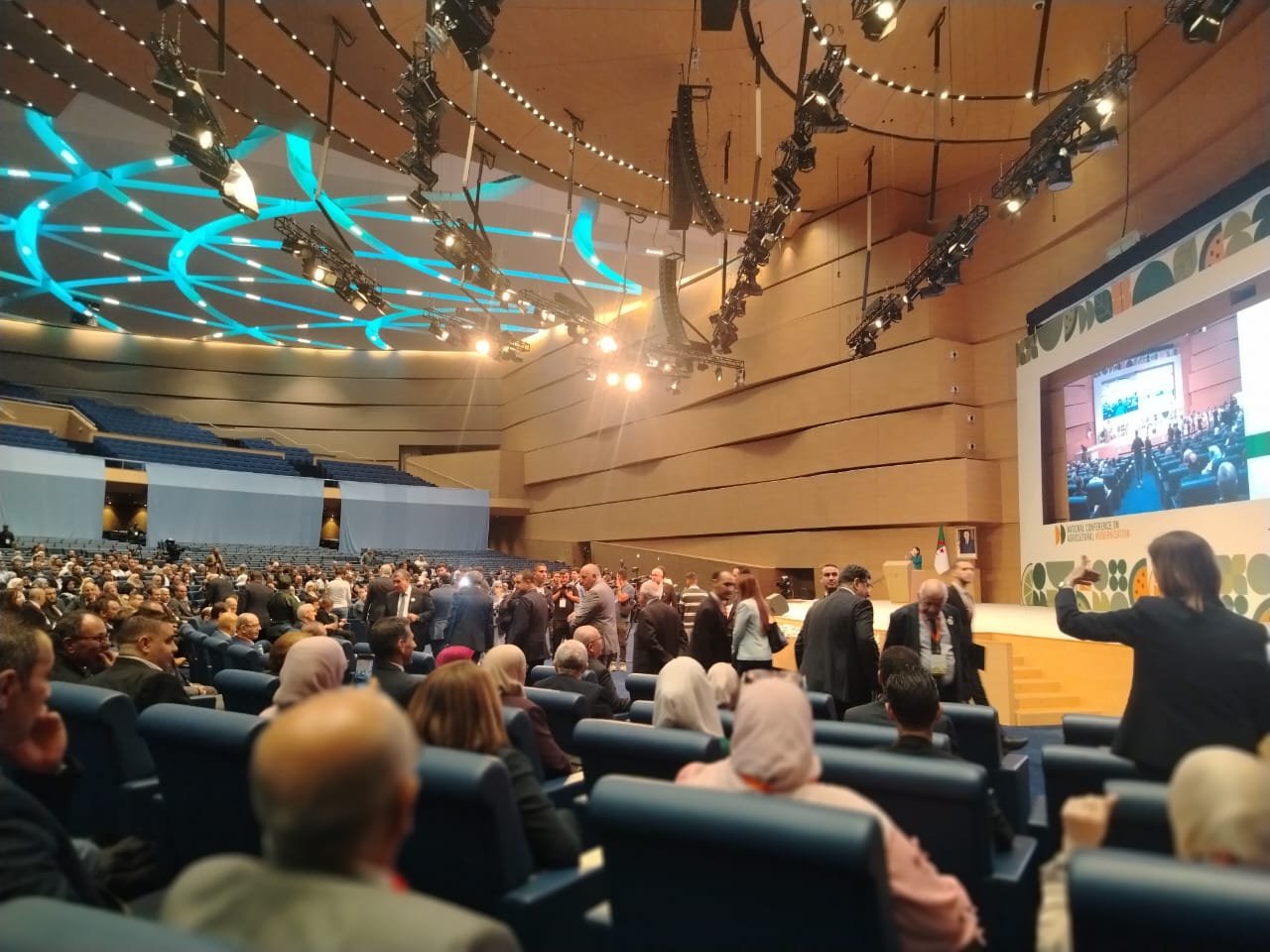
🔹 Executive Summary
The workshop produced eight key reform areas to modernize agricultural governance:
- Reorganization of interprofessional offices through auditing, harmonization, and performance contracts.
- Clarification of mandates between the Ministry and its subordinate institutions.
- Strengthening decentralization to bring services closer to farmers.
- Digitalization and simplification of administrative procedures.
- Improved coordination and digital interconnection among offices.
- Evolution of the governance model with broader participation from stakeholders and Saharan regions.
- Strengthened structuring of agricultural service directorates.
- Transformation of technical institutes into centers of expertise and innovation.
The Minister’s closing remarks emphasized collective intelligence, policy overhaul, technology and knowledge-driven management, innovative financing mechanisms, enhanced research and production, and the pivotal role of digitalization.
🙏 Opening Acknowledgements
- Tribute to Minister of Agriculture Yassin Ouali for his leadership and organization.
- Gratitude to moderators and coordinators Mr. Hartani, Mr. Bazrak, and Ms. Louksser.
- Appreciation to all participants and experts for their valuable contributions.
🏛 Reorganization of Interprofessional Offices
- Conduct a comprehensive audit to identify shortcomings.
- Review distribution of prerogatives to avoid duplication.
- Harmonize human and financial resources across entities.
- Establish performance contracts between the central administration and the offices.
🔄 Clarifying Mandates Between the Ministry and Its Agencies
- Redefine the Ministry’s role in control, regulation, legislation, and evaluation.
- Refocus subordinate structures on fieldwork and proximity actions.
- Revise the regulatory framework governing Chambers of Agriculture.
- Consider merging certain technical institutes to optimize efficiency.
📍 Decentralization and Local Service Delivery
- Review the organization of regional directorates and sub-offices.
- Introduce a specific status for the communal agricultural delegate.
- Establish specialized communal delegations.
💻 Digitalization and Administrative Simplification
- Carry out an exhaustive inventory of administrative procedures to eliminate redundancies.
- Develop a fully digital public agricultural services platform.
- Explore the creation of a one-stop digital service window for all procedures.
🤝 Coordination Among Interprofessional Offices
- Strengthen the coordination role within their statutes.
- Digitally interconnect their platforms to facilitate data exchange.
🌐 Governance Model and Representation
- Expand representation of technical institutes in the new provinces (wilayas).
- Strengthen the Technical Institute for Saharan Agricultural Development.
- Consolidate the participatory approach by involving all value chain stakeholders.
🏢 Restructuring Agricultural Service Directorates
- Empower and equip heads of services with stronger means and authority.
- Expand staff teams to improve operational effectiveness.
💡 Transforming Technical Institutes into Centers of Expertise and Innovation
- Revitalize research units by addressing financial and HR constraints.
- Adopt open innovation to involve external actors and move beyond traditional in-house R&D models.
🎙 Minister’s Closing Address
- Emphasis on collective social intelligence and the need for open dialogue spaces.
- Distinction between sectoral goals (field outcomes) and ministerial responsibilities (policy formulation).
- Call for revisiting post-independence mechanisms to build a more pragmatic agricultural model.
- Announcement of the National Food Security Council to promote research and university innovation.
- Stress on digitalization for data-driven decision-making and rational resource management.
- Advocacy for new financing mechanisms (venture capital, alternative instruments).
- Focus on land management modernization and digitalization of property systems.
- Highlight the importance of genetic improvement research and a productive Saharan agriculture.
- Acknowledgement of experts, international organizations, and the Algerian diaspora for their valuable input.
🧭 Key Conclusions
- Launch audits and performance contracts for interprofessional offices.
- Clearly redefine the roles of the Ministry and its subordinate institutions.
- Expand decentralization and strengthen local agricultural services.
- Implement large-scale digitalization and administrative simplification.
- Enhance institutional coordination and digital interconnectivity.
- Move toward a participatory, inclusive model adapted to Saharan regions.
- Reinforce agricultural service directorates both structurally and in human resources.
- Transform technical institutes into open, innovation-driven centers of expertise.
Related Posts

Official Program of the International Fishing and Aquaculture Fair “SIPA 2025”
Day 1 – Thursday, November 6, 2025
08:00 - 10:00 Official guest reception (VIP Lounge / Le Méridien Hotel)Official opening ceremony...
Miloud Triaa, Director of Fisheries at the Ministry of Agriculture:“46 million fish were released during this season.”
The Director General of Marine Fisheries at the Ministry of Agriculture, Rural Development, and Fisheries, Miloud Triaa, presented a na...