Miloud Triaa, Director of Fisheries at the Ministry of Agriculture:“46 million fish were released during this season.”
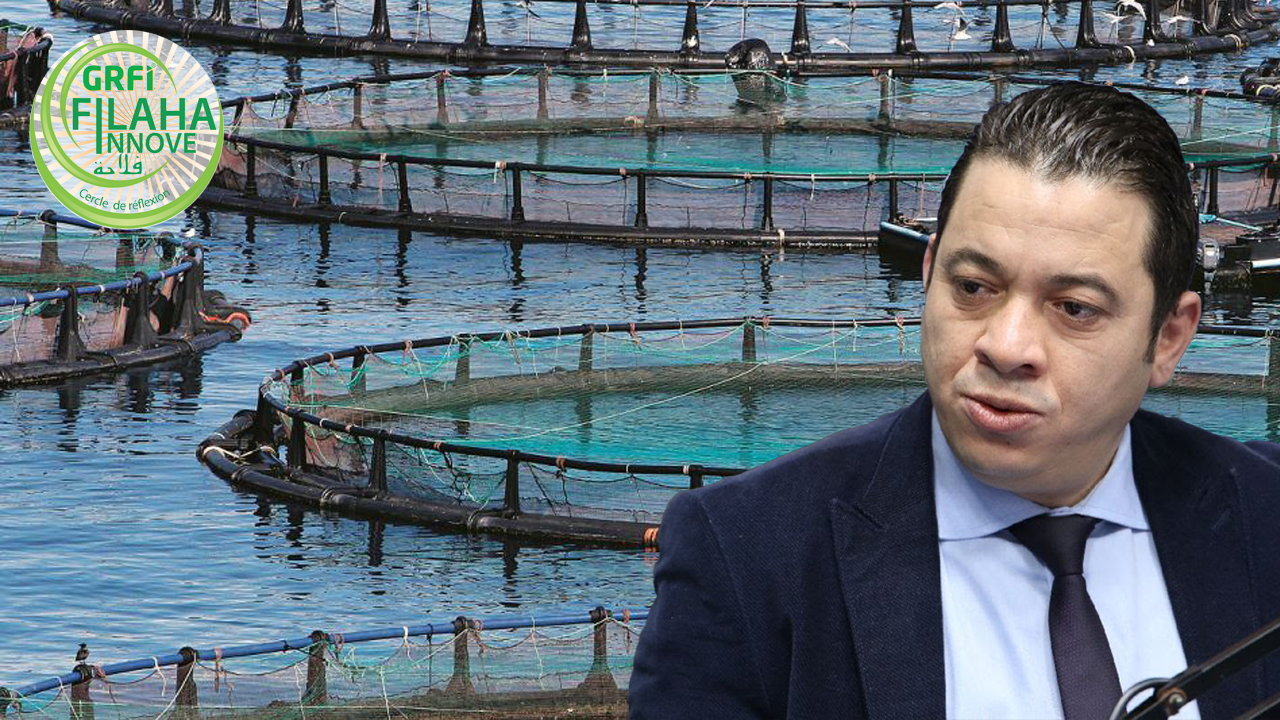
The Director General of Marine Fisheries at the Ministry of Agriculture, Rural Development, and Fisheries, Miloud Triaa, presented a national strategy focused on sustainable economic diversification, the preservation of fishery resources, and their rational and responsible exploitation.
This approach is part of a broader vision aimed at strengthening national food security and reducing dependence on foreign markets.
According to Massiva Zehraoui (Le Soir d’Algérie, Algiers), Algeria currently has 27 aquaculture production projects, as stated by Miloud Triaa during his appearance yesterday on the “Morning Guest” program on Radio Channel 1.
He noted continuous expansion operations, highlighting the growing interest of investors in this sector.
Triaa explained that around 46 million juvenile fish were released this season, representing a 50% increase compared to previous seasons, which constitutes a record quantity and underscores the success of the national policy implemented in this field.
Regarding production diversification, Triaa stated that the country farms two main marine fish species — sea bream and sea bass — in addition to red tilapia in freshwater.
He also mentioned plans to launch shrimp farming projects in cooperation with Japan, with expansion expected in the near future following the success of recent joint experiments in this field.
The official also highlighted a set of new projects and measures designed to support the aquaculture sector in Algeria, particularly in inland provinces.
He pointed out that the province of Chlef is emerging as a leader in freshwater fish farming, notably red tilapia, locally known as Tilapia fish.
“We intend to launch production and stocking operations for shrimp and tilapia in shared ponds,” he said, emphasizing that freshwater aquaculture is considered a key driver for ensuring the sustainability of marine resources and enhancing the sector’s contribution to national food security.
This approach, he added, falls within the framework of developing both marine and inland aquaculture projects.
The ministry is also working to develop processing and support industries for aquaculture, including animal feed manufacturing, fish product packaging, and juvenile fish breeding, with the goal of reducing reliance on global markets and promoting more autonomous local production.
The Director of Fisheries stressed that the sector should attract new investments to localize the production of fish feed and juvenile fish, while reducing obstacles related to international supply chains.
He added that Algeria has the necessary capacities to become a regional hub for aquaculture, particularly in southern and inland provinces.
Once again, Chlef was highlighted as a reference model, with prospects for exporting to neighboring countries.
The stated goal, he said, is to “completely stop the importation of freshwater fish and strengthen sustainable national production.”
Triaa recalled that in 2024, the ministry conducted a comprehensive census of water basins used for irrigation, which will serve as a foundation for defining future objectives in expanding fish stocking operations, notably through the signing of performance contracts at the provincial level.
He added that the results of the 2024 general agricultural census, particularly regarding the number of basins dedicated to irrigation, should be used to expand aquaculture through the creation of small cooperatives bringing together farmers and young graduates from fisheries institutes.
Finally, Triaa announced that the 2025 Finance Law provides for the establishment of a new system of incentives, including the category of housewives, in order to support and encourage local initiatives and private investment in aquaculture and related activities.
According to him, this set of measures aims to make Algeria a key regional player in aquaculture, while strengthening national food security and gradually reducing external dependence.